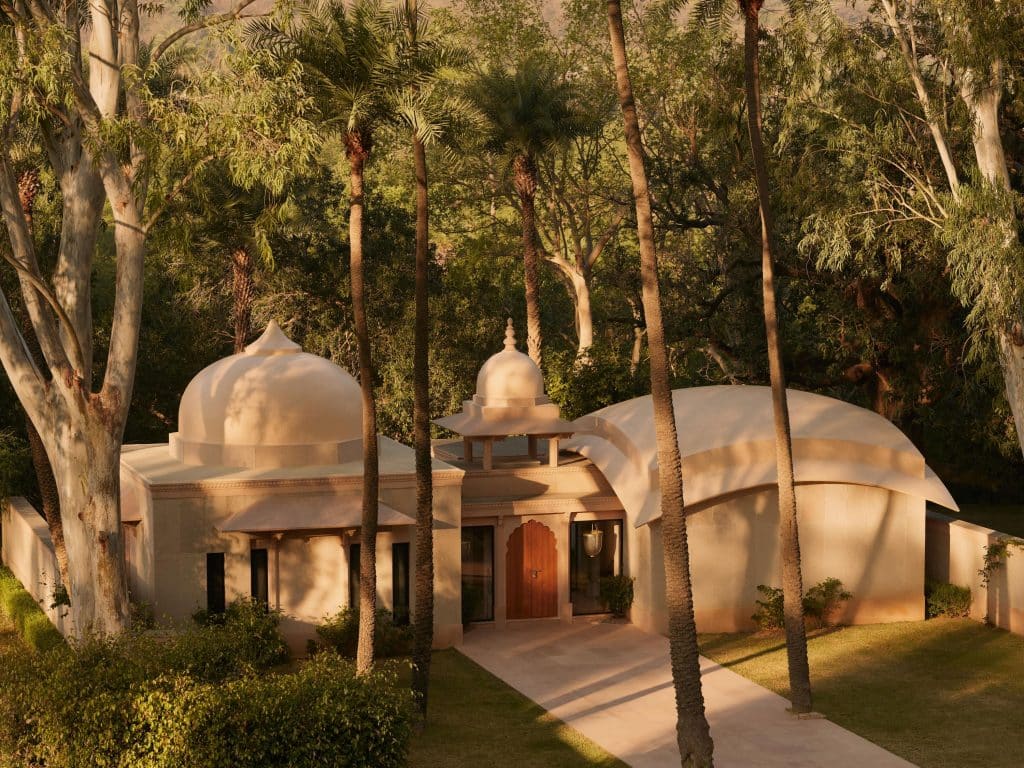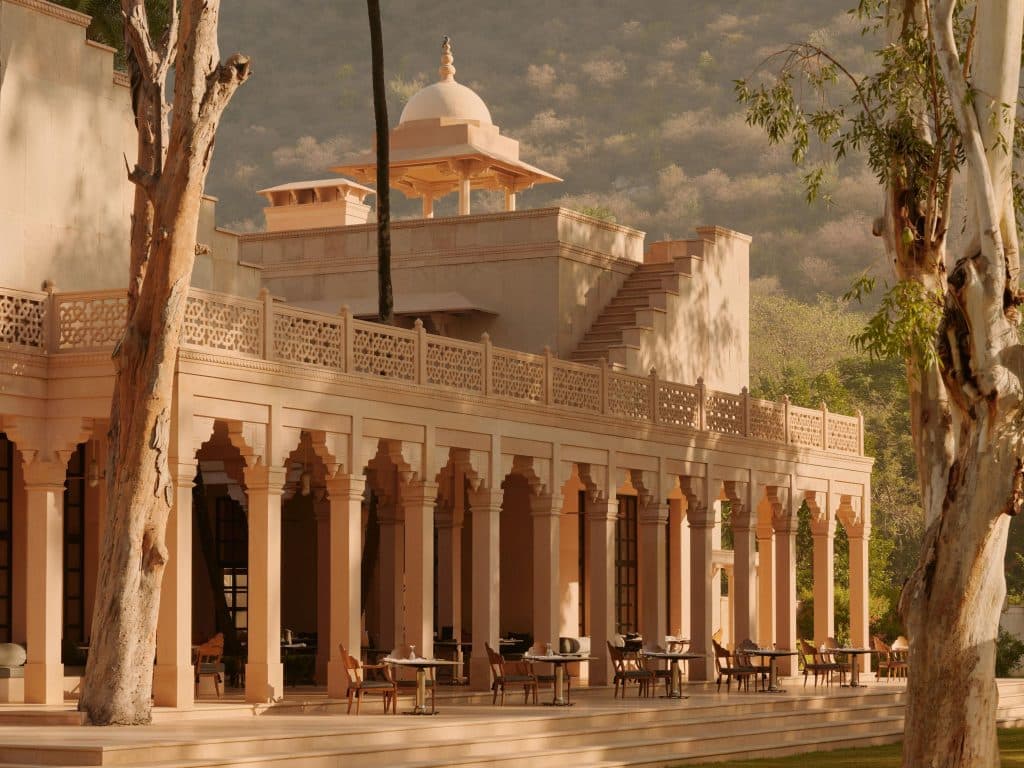

Picture this…Mughal inspired grand domes and rose-hued cupolas, high arches in locally carved pink marble and sandstone with each arc symbolizing hands together in prayer and gratitude, set amidst the stunning Aravali Hills of Rajasthan offering an embrace to nature and architecture in one breath. This is Amanbagh, a modern day palace that brings history, tradition and modern comforts under one roof. Luxury in hospitality is defined in many ways – but the Aman way is one that subtly grows on you and helps you discover joy in small things we often take for granted. The sounds of chirping birds, a shaded pool in summers, a private dinner on the rooftop bar, and a personal encounter to local tradition and culture offered to you on a curated platter.
God is in the details
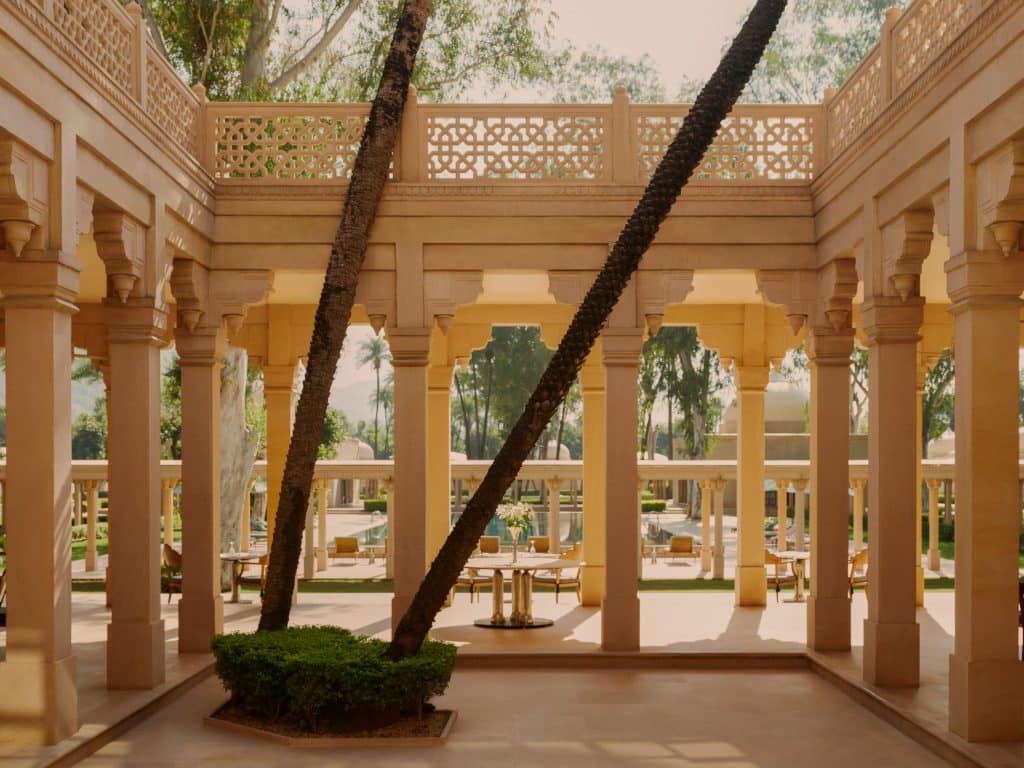
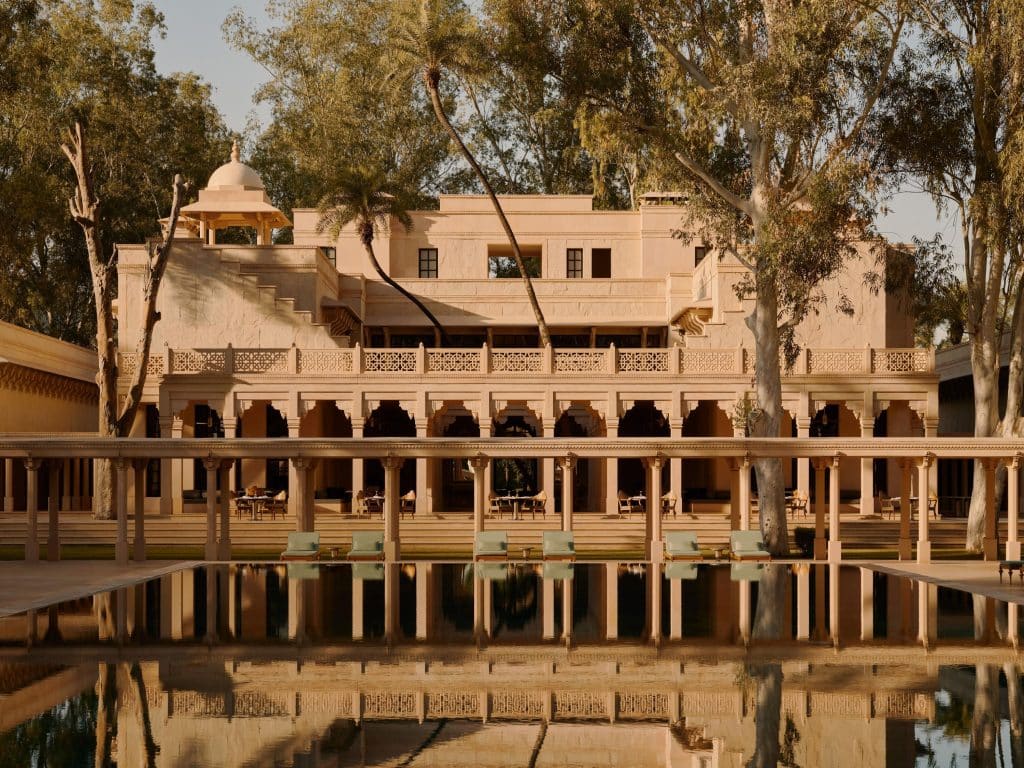
The design of Amanbagh immediately transports guests into the storied past of the region and its royalty. Nothing prepares you for the magic of its architectural splendour. Re-shaped by architect Ed Tuttle, the modern-day Mughal palace has been carved out of the palest of sandstone and local pink marble, with scalloped arches and cupolas nodding to India’s golden age. The foundation of Mughal rule in the 16th and end of 17th century ensured that the Rajput rulers of those principalities inherited a new process of cultural synthesis in the area of art, architecture and letters. Rajput buildings constructed during this period freely borrowed arches, domes, turrets producing some of the best architectural marvels of that time. Mughal Architecture is remarkably symmetrical and decorative amalgam and this appealed to Ed Tuttle’s own natural inclination and indicative style of architecture hence Amanbagh is a perfect reflection of it. Amanbagh or the Garden of peace or peaceful garden honours the 17th century Indo Moslem floral tradition and incarnation of ancient Persian paradise. An apt expression of the relaxed yet sumptuous surroundings for a true Rajasthan Royal sojourn.
Respecting cultural context
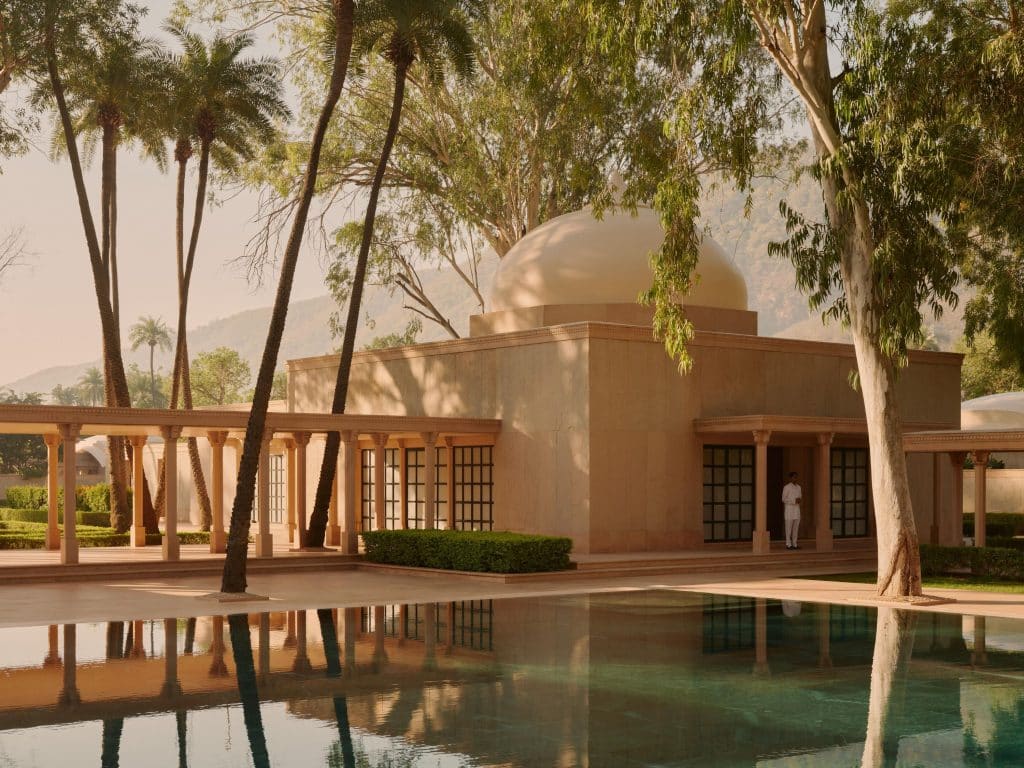
The highlight of the property has to be the architectural masterpiece ie the main pool and surrounding structure reflected magnificently in the calm waters of its 33 metre long emerald green marble pool. Respect for the cultural context of the location and the potential impact of the structures on the surrounding environment is fundamental to his approach. The architecture is balanced, aesthetically peaceful, pleasant, understated, and dramatic, even though it’s understated—a succession of drama and intimacy. It plays around the concept of symmetry, which is proven in studies to be preferred by the human brain.
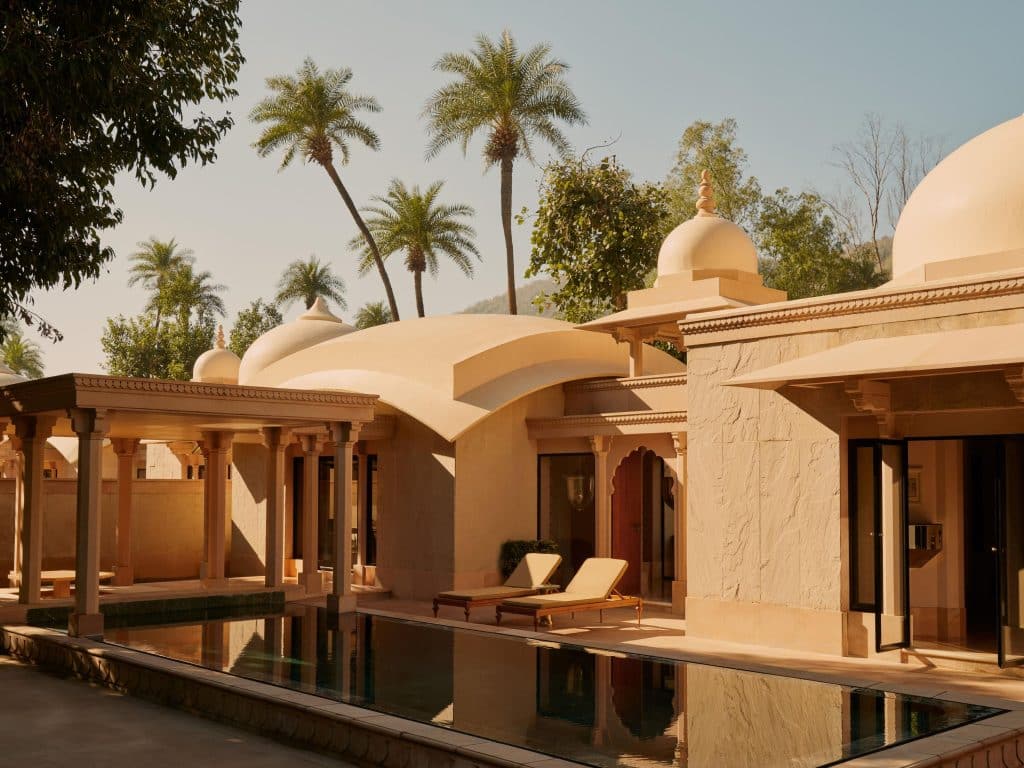
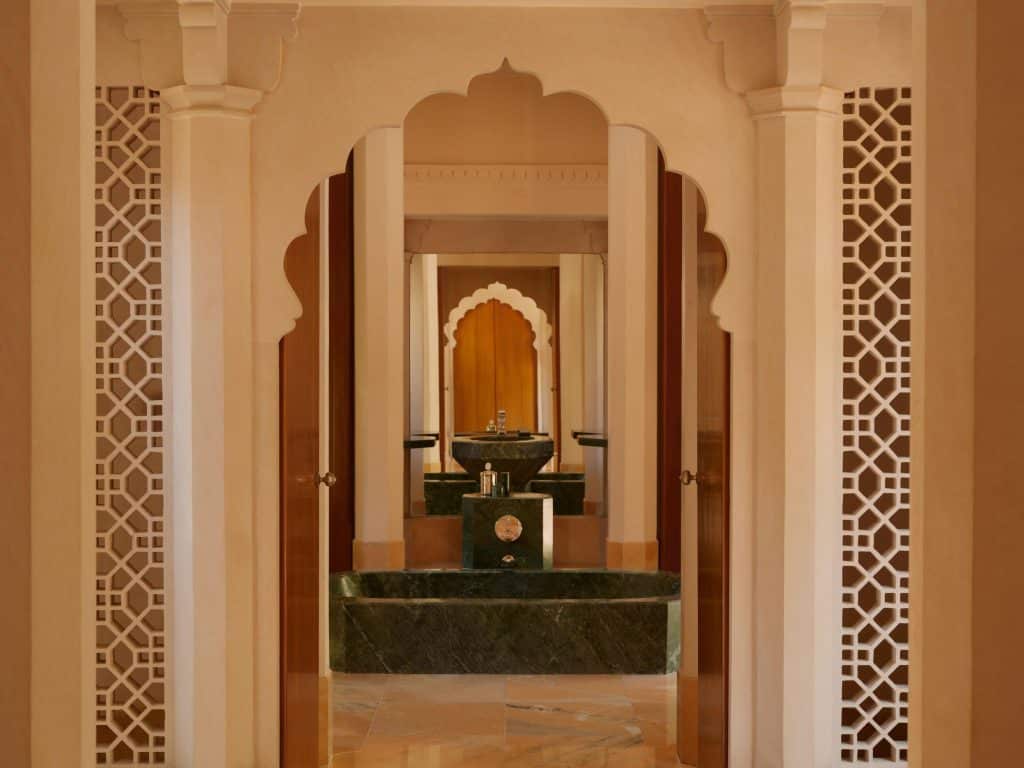
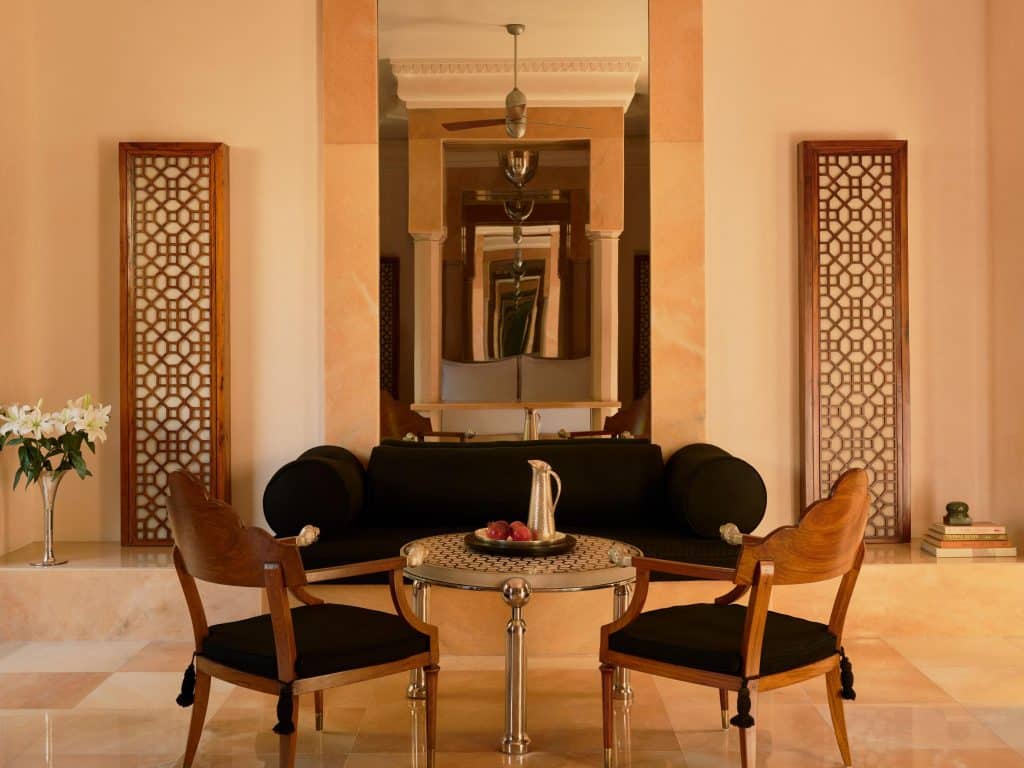
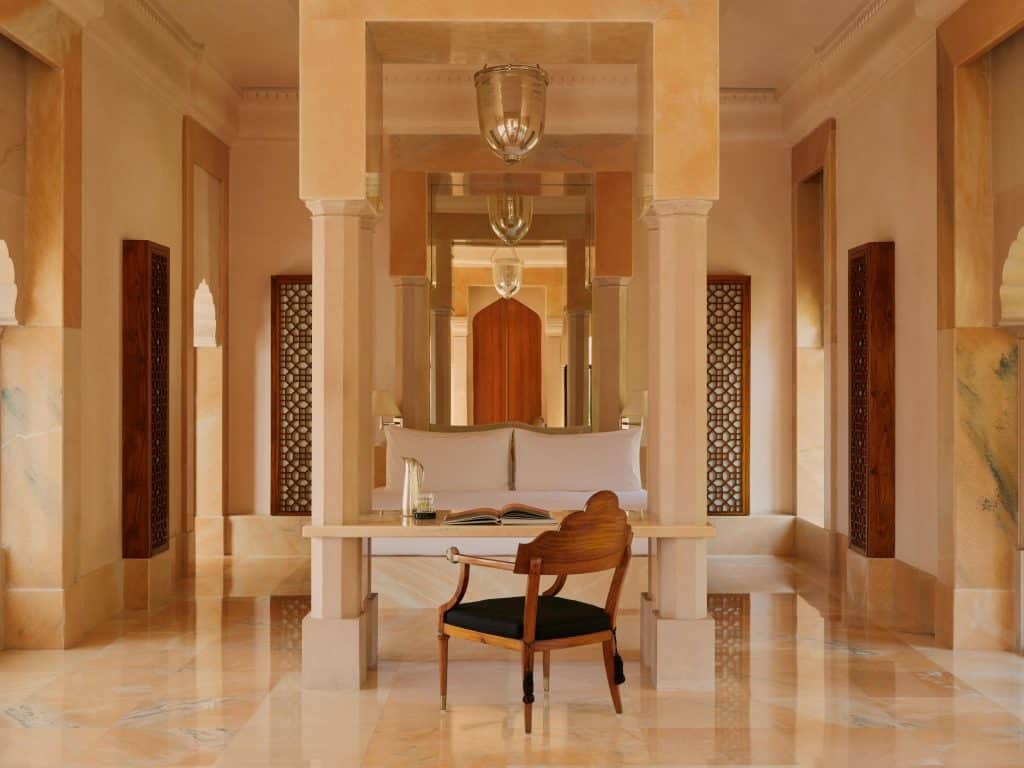
The rooms are collection of Pool Pavilions and Haveli suites with terraces and courtyards with large Udaipur marble bathtubs carved miraculously from a single piece of marble. The interior design intent resonates from the need to focus on sustainable and contextual design that emphasises an Indian ethos, for a new architectural idiom. A lot of research went into the use of local materials and the capabilities of local craftsmen to create such a unique expression of design, scale and artistry. The bathtubs are renowned for their exceptional beauty and for the teams of craftsmen putting painstaking and distinguished effort into conceiving a wondrous masterpiece into all of the bathrooms across the 37 suites and pavilions. Many months were taken to implement this vision and adaptation of design and view it as a work of art to be enjoyed in the sumptuousness of its scale and material. Almost like being first hand witness to the artistic passion and warmth of the creator and bathing in the midst of a large sparkling emerald pool.
Artfully created
Most works of art are artistic and creative ideas that come from years of imbibing nature’s way and the application of it across art and architecture. The focus of the design is on how materials can work and respond under different expressions. The incorporation and instances of a single stone or marble in Mughal architecture were many and which formed the inspiration to attempt an artistic interpretation and modern rendition of it in the deep soaking bathtubs at Amanbagh.
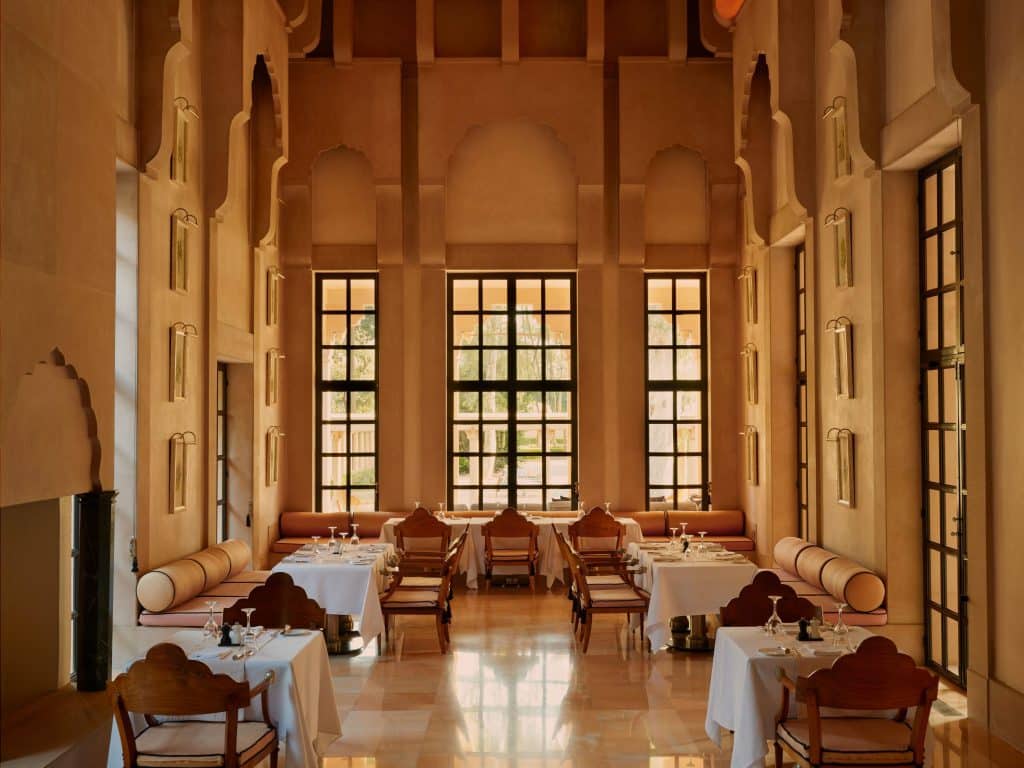
The biggest luxury that Amanbagh offers is the emphasis on space. Its remote location and limitation to the number of guests offers a harmonious relationship between the architecture and local environment, whilst allowing guests intimate and unrestricted access to the destination.